The Most Important Election of Our Lifetime, Again
Every election becomes the final battle for civilization. Somehow civilization keeps having another final battle two years later.
By Chris Markl
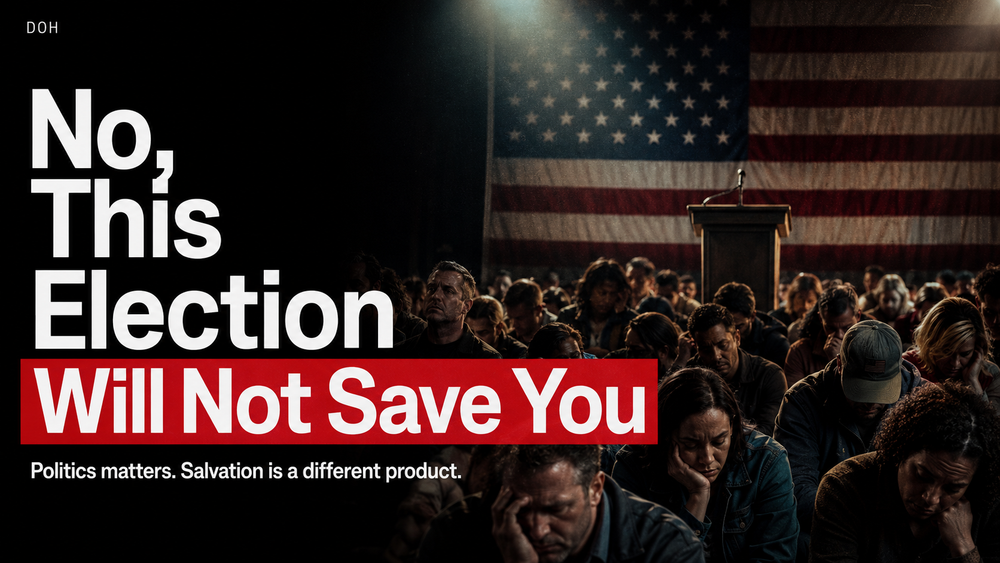
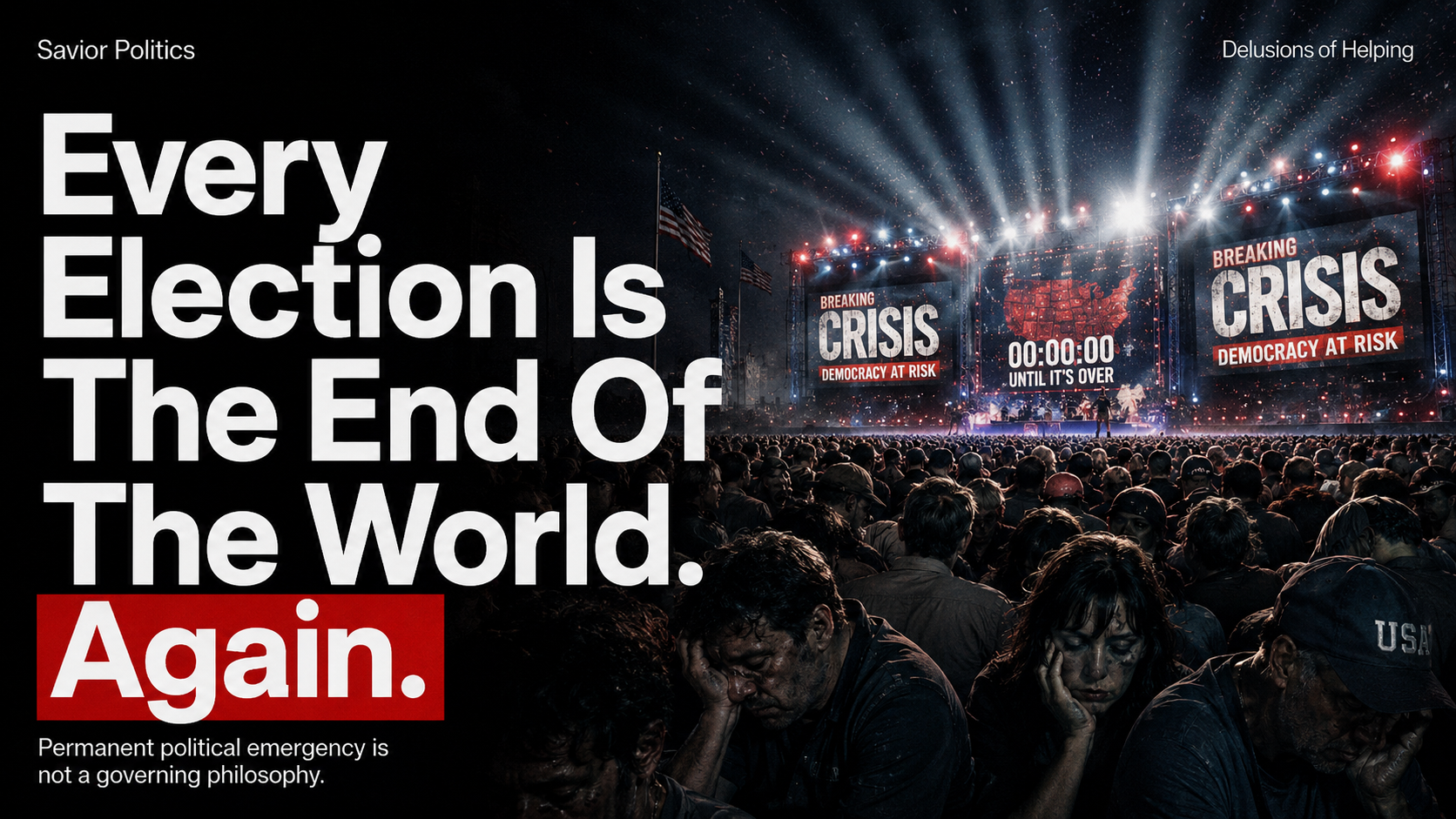
Every election is the most important election of our lifetime.
Again.
This is one of the strangest little rituals in American politics. Every cycle, the machinery resets. The emails begin. The ads return. The consultants assemble. The donors are warned. The base is activated. The pundits become grave. The stakes are declared historic. Democracy is on the line. Freedom is on the line. Justice is on the line. The economy is on the line. Children are on the line. The future is on the line. Civilization itself has apparently wandered onto the ballot again.
At a certain point, existential politics starts sounding like a subscription model.
Then, somehow, the most important election of our lifetime is followed by another most important election of our lifetime.
Then another.
Then another.
At a certain point, the phrase stops sounding like analysis and starts sounding like a subscription model.
This does not mean elections are unimportant. Elections matter. They decide real offices, real laws, real judges, real budgets, real appointments, real agencies, and real uses of public power. A person who says politics never matters is usually trying to sound wise by being lazy.
Politics matters.
That is why savior politics is so dangerous.
It takes something important and turns it into emotional salvation.
A serious election asks citizens to choose among flawed people, imperfect parties, partial policies, limited powers, institutional constraints, tradeoffs, risks, and consequences.
A savior election asks citizens to believe the nation can be redeemed if the right side wins.
That is a very different psychological product.
The campaign no longer sells governance. It sells rescue.
Vote and save democracy.
Vote and stop fascism.
Vote and take the country back.
Vote and protect the children.
Vote and restore greatness.
Vote and defeat evil.
Vote and prove you are a decent person.
Vote and join history.
Vote and become part of the moral emergency.
This is effective because people want politics to mean more than it can deliver. They want a clean battle between good and evil. They want the right leader to make the country feel sane. They want voting to wash away the humiliation of living inside broken systems. They want a campaign to give shape to anger, fear, loneliness, status anxiety, and cultural confusion.
Campaigns understand this.
So do media companies.
So do platforms.
So do fundraising teams.
So do consultants.
The most important election of our lifetime is not just a civic claim. It is a business model.
Fear raises money. Doom increases clicks. Panic drives turnout. Enemies simplify complexity. Emotional urgency reduces patience. Every ordinary policy disagreement can be inflated into a moral catastrophe. Every candidate can be presented as either national rescue or civilizational threat.
Everyone gets a role.
The politician becomes the protector.
The donor becomes the defender.
The voter becomes the hero.
The opponent becomes the danger.
The media becomes the emergency broadcaster.
The consultant becomes the priest of the battlefield.
And the country becomes a stage where everyone performs existential seriousness while many of the underlying systems continue to rot quietly between cycles.
This is the trick.
Savior politics focuses emotional intensity on the election because elections are legible. They have dates. Winners. Losers. Maps. Speeches. Drama. Conflict. Suspense. A scoreboard.
Real governance is less entertaining.
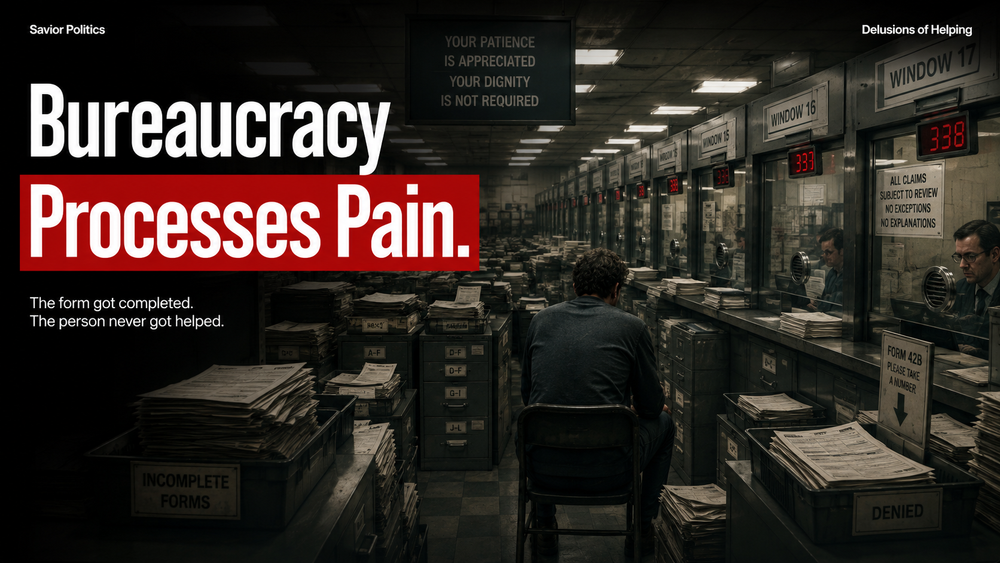
Implementation is boring. Procurement is boring. Agency management is boring. Budget design is boring. Rulemaking is boring. Staffing is boring. Performance measurement is boring. Service delivery is boring. Administrative failure is boring until it ruins someone’s life.
So the public gets trained to experience democracy as a series of dramatic elections instead of a long practice of building and maintaining institutions that actually work.
That is how a country can become politically obsessed and civically incompetent.
People know every poll.
They do not know whether the local agency answers the phone.
They know every debate clip.
They do not know where public money goes.
They know every scandal.
They do not know whether the program helped.
They know which side they hate.
They do not know what would improve the system.
Everyone claims they are helping.
Fine.
Prove it.
If this election is so important, show the theory of change.
What will actually improve if your side wins?
Which institutions will perform better?
Which public services will become faster, clearer, fairer, cheaper, or more effective?
Which people will gain safety, income, capability, freedom, stability, health, opportunity, or dignity?
What will be measured?
What will be stopped if it does not work?
What will you ask of voters after the election besides fear, loyalty, donations, and another round of panic?
That is the question savior politics avoids.
Because the answer is usually less exciting than the emergency.
Many elections matter. Some matter a lot. But every election cannot be the final battle for all meaning without turning public life into permanent nervous system warfare.
A healthier politics would still ask people to vote.
It would still ask people to care.
It would still name real dangers.
But it would stop pretending that salvation comes from a campaign calendar.
The election is not the end of the work.
It is one input into the work.
After the yard signs come down, the country still has to govern. After the speeches end, the forms still have to be simplified. The housing still has to be built. The schools still have to teach. The agencies still have to perform. The laws still have to be implemented. The budgets still have to reflect priorities. The incentives still have to change.
That is less cinematic than the final battle.
It is also where helping either happens or does not.
So vote.
Care.
Argue.
Organize.
Pay attention.
But when someone tells you this is the most important election of your lifetime, ask a calmer question.
Important for what?
And after it is over, who is going to prove that anything got better?