Impact Reports Are Not Impact
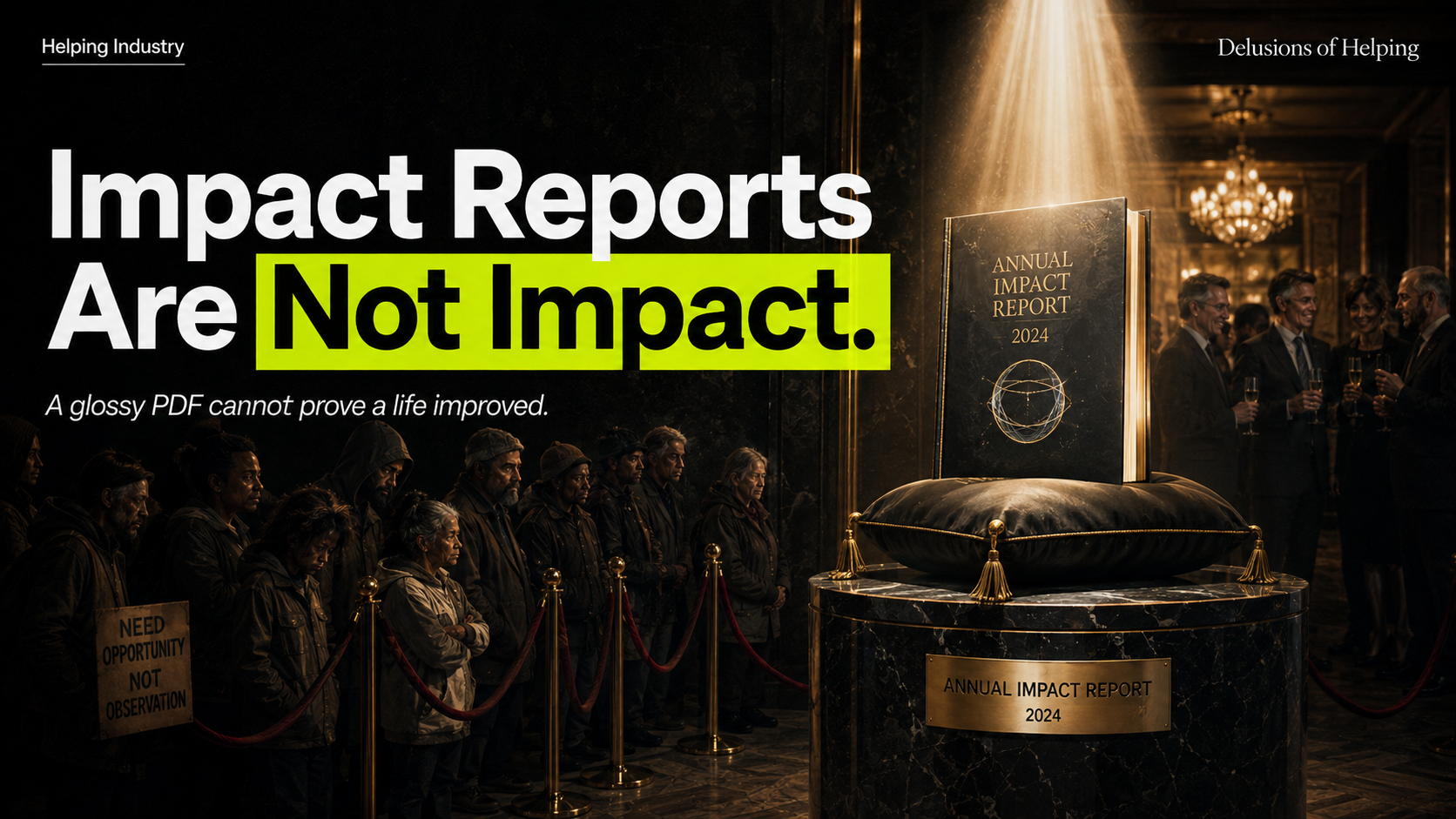
A beautiful report can tell a good story. It cannot prove that anyone’s life actually got better.
By Chris Markl
Impact reports are not impact.
They may contain impact. They may describe impact. They may point toward impact. They may summarize real work done by sincere people who care deeply and tried hard.
But the report itself is not impact.
This should be obvious.
It is somehow not obvious.
Every year, organizations release polished documents filled with smiling faces, colorful charts, warm quotes, impressive numbers, donor language, strategic priorities, and words like equity, innovation, community, resilience, access, empowerment, transformation, and systems change.
The report looks beautiful.
The organization looks serious.
The funders look wise.
The board looks responsible.
The staff looks productive.
The public is supposed to feel reassured.
Something good appears to have happened.
Maybe it did.
Fine.
Prove it.
The problem with impact reports is not that organizations report their work. Reporting is necessary. Transparency matters. Donors, taxpayers, boards, communities, and beneficiaries deserve to know what happened.
The problem is that impact reporting often becomes reputation management with numbers.
The report does not ask the hardest question.
It asks what can be shown.
How many people were served?
How many programs were delivered?
How many dollars were distributed?
How many events were held?
How many partners were engaged?
How many impressions were reached?
How many testimonials were collected?
How many communities were touched?
These may be useful facts.
They are not automatically proof of help.
Serving someone does not mean you improved their life.
Reaching someone does not mean you changed their condition.
Training someone does not mean they gained capability.
Engaging partners does not mean the system improved.
Distributing money does not mean the problem was solved.
Collecting a quote does not mean the work was effective.
The Helping Industry has become extremely skilled at telling stories of activity.
It is much less comfortable proving improvement.
Improvement is harder.
Improvement requires comparison. It requires follow up. It requires uncomfortable baselines. It requires asking what would have happened without the program. It requires admitting that some people did not benefit. It requires separating temporary relief from durable change. It requires looking at cost, not just compassion.
Most importantly, it requires accepting that noble work can still underperform.
That is the sentence the industry hates.
Noble work can still underperform.
Good people can run weak programs.
Beautiful missions can hide bad systems.
Generous donors can fund ineffective models.
Beloved organizations can become better at surviving than solving.
A serious impact report would make room for that truth.
It would not only say what went well.
It would say what did not.
It would say what the organization learned.
It would say what will stop.
It would say what will change.
It would say which metrics were weak.
It would say where outcomes were unclear.
It would say what evidence is still missing.
It would respect readers enough not to confuse confidence with proof.
But many reports are not written for learning.
They are written for reassurance.
The donor should feel the money mattered.
The board should feel governance worked.
The staff should feel seen.
The executive should look effective.
The organization should remain fundable.
The brand should remain noble.
That is understandable.
It is also dangerous.
Because once a sector gets rewarded for looking impactful, it will produce more things that look impactful.
More stories.
More dashboards.
More convenings.
More reports.
More language.
More campaigns.
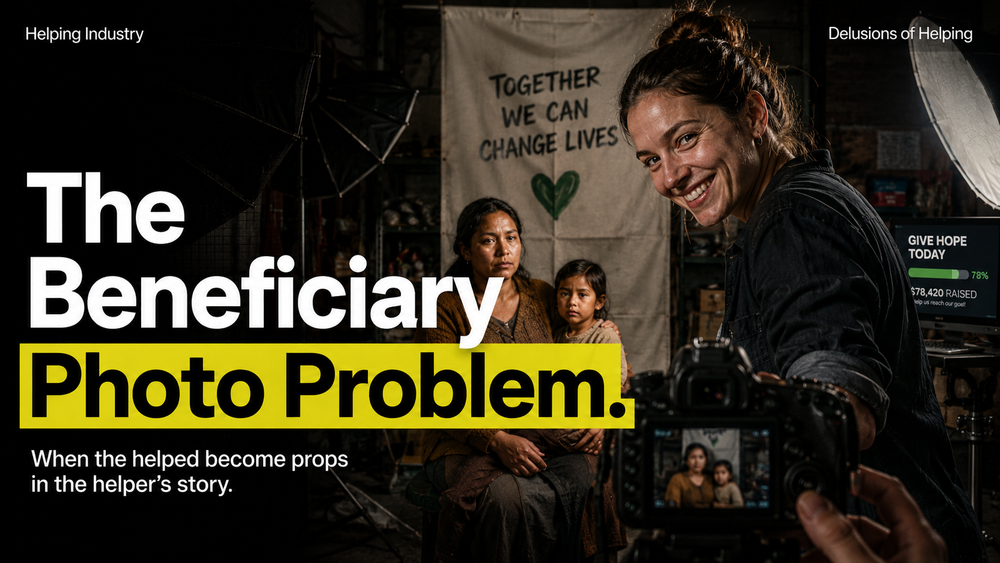
More photos of people being helped by organizations that may or may not know whether the help actually held.
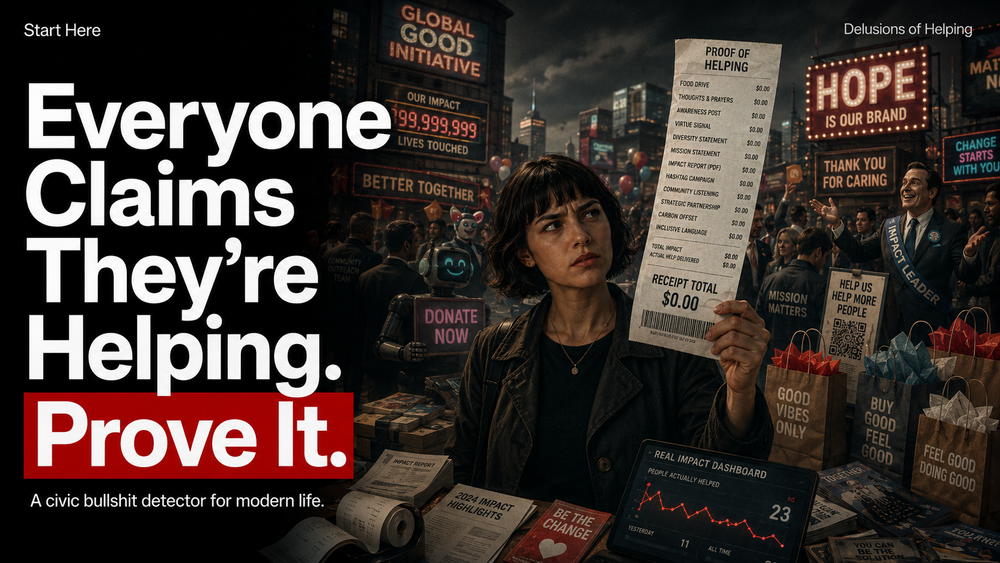
Everyone claims they are helping.
Fine.
Prove it.
A real impact report should answer better questions.
Who improved?
How did they improve?
How much did they improve?
How long did the improvement last?
What did it cost?
Who did not improve?
What did we misunderstand?
What would we do differently?
What would have happened without us?
What could have helped more?
Those questions are not hostile.
They are the minimum standard for taking helping seriously.
The helped deserve more than a page in a report.
They deserve results.
The public deserves more than inspirational formatting.
It deserves honesty.
The organization deserves more than applause.
It deserves the chance to become better.
A beautiful impact report can be useful.
But do not confuse the report with the work.
And do not confuse the work with the outcome.
Impact is not the story you tell after the program.
Impact is what changed because the program existed.
Everything else is packaging.