Luxury Is Not Liberation
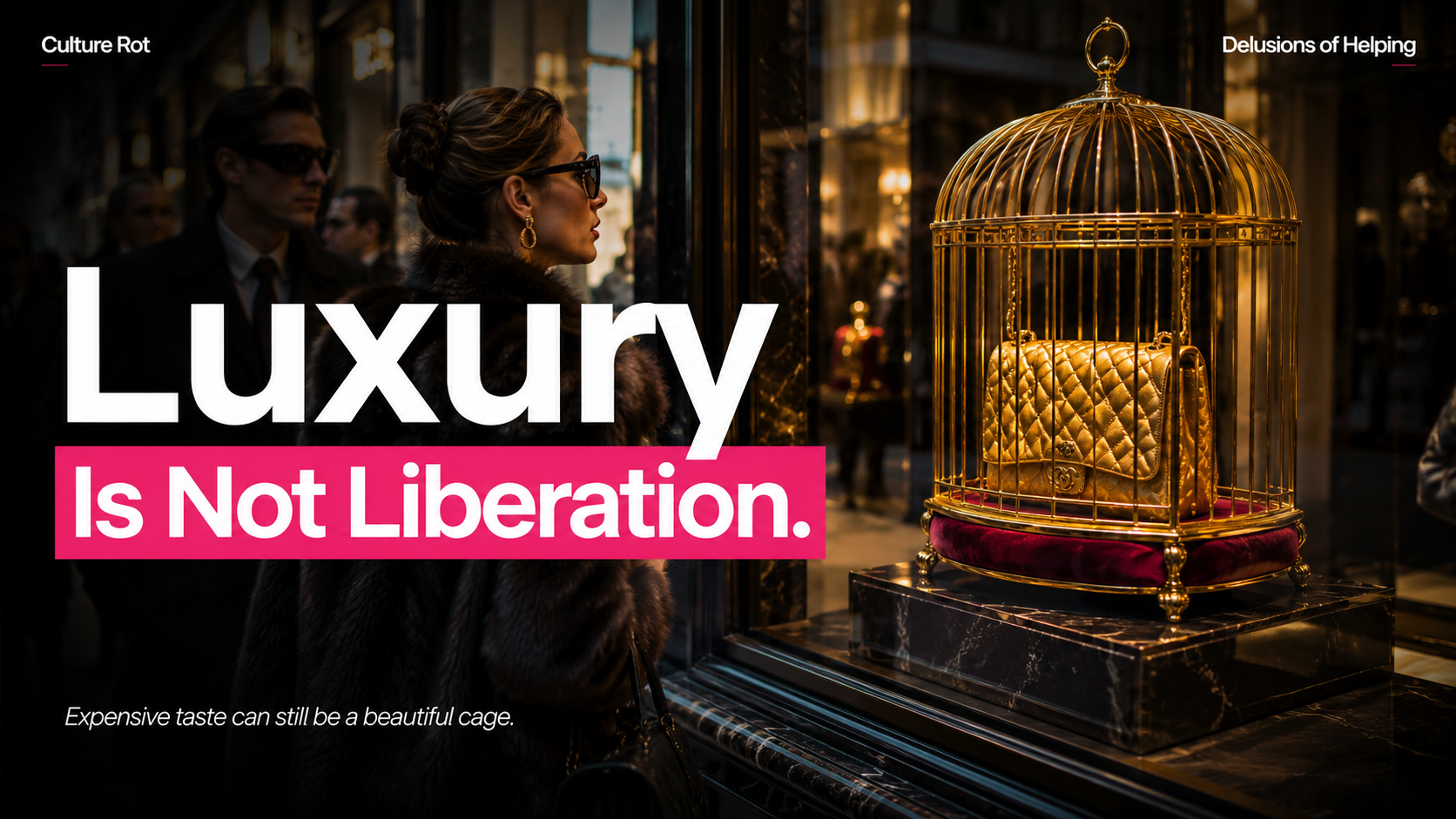
Expensive taste can be fun. It becomes delusional when consumption is sold as freedom, empowerment, and personal transcendence.
By Chris Markl
Luxury is not liberation.
It may be beautiful. It may be well made. It may feel wonderful. A great hotel, a beautiful bag, a perfect watch, a gorgeous dress, an incredible meal, a first class seat, a spa weekend, a lovely home, a soft robe, a quiet pool, a ridiculous candle that somehow costs more than groceries.
Fine.
Enjoy beautiful things.
The delusion begins when luxury stops being pleasure and starts pretending to be freedom.
Modern consumer culture is very good at turning expensive things into moral stories.
The bag is not just a bag. It is empowerment.
The vacation is not just a vacation. It is healing.
The skin care routine is not just skin care. It is self respect.
The outfit is not just an outfit. It is identity.
The house is not just a house. It is proof that you manifested correctly.
The hotel is not just a hotel. It is evidence that you have become the kind of person who deserves soft lighting and cucumber water.
The brand does not merely sell an object.
It sells a rescue fantasy.
You were ordinary.
Now you are elevated.
You were tired.
Now you are restored.
You were insecure.
Now you are chosen.
You were invisible.
Now you are someone who knows where to brunch in linen.
This is Culture Rot with better upholstery.
Luxury can be enjoyable without being sacred. The problem is not wanting nice things. The problem is when nice things are sold as the solution to spiritual, emotional, social, and existential problems they cannot solve.
A handbag cannot give you dignity.
A resort cannot give you peace.
A car cannot give you self worth.
A watch cannot give you time.
A designer label cannot give you character.
A perfect apartment cannot give you a life.
It can decorate one.
That is not nothing.
But it is not liberation.
The luxury economy thrives because people are not just buying objects. They are buying distance from shame. Distance from insecurity. Distance from ordinariness. Distance from the fear that life is passing by and everyone else has figured out the correct aesthetic.
Influencer culture intensifies this.
Every beautiful room becomes a promise. Every hotel balcony becomes a sermon. Every outfit becomes a theory of selfhood. Every morning routine becomes a lifestyle constitution. Every expensive product is framed as investment, alignment, self care, elevation, abundance, taste, or becoming your highest self.
Sometimes the content is harmless.
Sometimes it is a polished machine for making people feel poor in ways that have nothing to do with money.
That is the trick.
Luxury does not only separate people by income.
It creates emotional hierarchy.
Some people appear to be living correctly.
Others appear to be failing at beauty.
This is especially cruel because the performance is endless. There is always a better hotel, better face, better body, better kitchen, better table setting, better airport lounge, better supplement, better neighborhood, better retreat, better version of yourself available for purchase.
The finish line moves because the market needs it to move.
A culture organized around consumption can never let people feel complete.
Completeness is bad for sales.
Everyone claims they are helping.
Fine.
Prove it.
Did the product help?
Did the purchase improve your life?
Did the luxury give real joy, rest, usefulness, craft, beauty, or comfort?
Or did it briefly reduce anxiety before creating the need for the next symbol?
That distinction matters.
Pleasure is not the enemy.
Beauty is not the enemy.
Craft is not the enemy.
Money is not the enemy.
The enemy is the lie that consumption can rescue the self.
The luxury industry loves that lie because it turns insecurity into demand.
You do not need a better bag.
You need a better self.
Conveniently, the better self is available in this season’s collection.
This is why luxury empowerment language is so strange. It asks people to confuse access to expensive goods with liberation, as if freedom means being able to buy better symbols inside the same status game.
But liberation should probably make you less dependent on symbols.
Not more.
A person who is free can enjoy nice things without needing them to prove existence.
A person who is free can admire beauty without becoming ashamed of ordinary life.
A person who is free can buy the thing without believing the thing contains salvation.
That is the healthier relationship.
Want the hotel because it is relaxing.
Want the jacket because it is beautiful.
Want the meal because it tastes good.
Want the trip because the world is worth seeing.
But
do not let a brand convince you that your soul is underdressed.
Culture Rot is not always ugly.
Sometimes it is stunning.
Sometimes it smells expensive.
Sometimes it arrives in soft packaging with words like ritual, intentionality, radiance, elevation, and timeless.
That makes it harder to notice.
But the question remains.
Did this make life better, or did it just make insecurity more aesthetic?
Luxury can be lovely.
It can be fun.
It can be artful.
It can be worth enjoying.
But it is not liberation.
A beautiful cage is still a cage if you cannot stop needing people to admire it.